The Guardian recently published a compelling analysis highlighting a critical issue for those of us involved in building essential infrastructure: certain areas in the UK may face water shortages that could prevent them from achieving their net-zero targets. This challenge arises not from technological limitations, but from water availability.
The key takeaway is stark: even with advancements in renewable energy and grid upgrades, climate targets may still be unattainable if the underlying water systems cannot support these efforts.
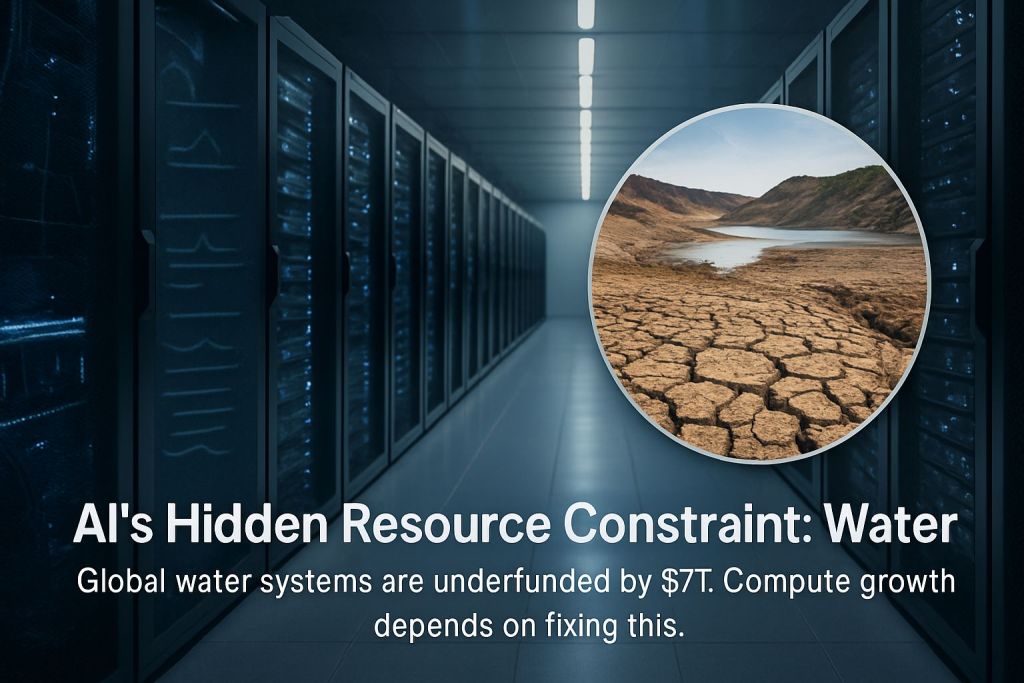
Water is fundamental to every aspect of society, including energy, industry, housing, and food production, yet we have consistently underinvested in this vital resource. The World Bank estimates that the global funding gap for water infrastructure has now surpassed $7 trillion.
This is not a distant concern; it is impacting advanced economies today. For those of us building AI infrastructure, this has significant implications. While we often discuss power constraints for data centers, water is emerging as an equally critical bottleneck in many regions.
If the UK, a developed economy in a relatively water-abundant area, is sounding the alarm, it is essential for any region looking to scale computing resources to take note. Water resilience will be one of the defining infrastructure challenges of the coming decade.